The lowest advertised commission may not deliver the strongest net result. Finding a vetted buyer for my classic car means weighing each route’s total costs, including commission, entry charges, and transport, against its audience and level of support. Fees depend on the selling channel and agreement, so compare the full cost before deciding.
It’s reasonable to want clarity before offering a rare car for sale. A headline rate alone won’t show what you’ll retain or how prospective buyers are screened. This guide covers what to prepare for an initial valuation, how to assess a buyer’s experience and seriousness, and how private sales, online auctions, live auctions, and consignment differ. It also explains which details and photographs help collectors assess condition and provenance. With these points in mind, compare routes on more than commission and choose one that suits the car, your priorities, and the discretion you expect.
Key Takeaways
- Assess a buyer through relevant transaction experience, credible references, and a clear willingness to proceed transparently.
- Compare selling channels by their full costs and likely audience, not commission alone; entry charges and transport can affect your net proceeds.
- Prepare a precise condition record and a considered set of photographs so collectors can evaluate the car with confidence.
- Bring together ownership documents, vehicle details, and a realistic valuation before engaging prospective buyers.
Checking a buyer’s reviews and experience
Treat a buyer’s public record as evidence to assess, not a substitute for clear terms. Read reviews on more than one platform, comparing dates, details, and whether they describe completed classic-car transactions. Look for recurring comments about payment timing, renegotiation after an agreement, inspection access, and communication. Consistent, detailed accounts carry more weight than brief praise. Ask the prospective buyer about experience with your car’s make, model, and condition.
Assess the car’s history with the same care. Organize available invoices, photographs, and repair records for accident damage, rust treatment, and replacement panels. Note which areas were repaired and when, rather than describing the work broadly. For vehicles built since 1981, the VIN format is standardized at 17 characters. Make the VIN visible in your records, and ensure the title, VIN plate, and stamped locations correspond. Clear documentation helps serious buyers evaluate the car on its actual condition.
Location affects inspection and transport planning, but distance alone doesn’t establish a buyer’s credibility. Confirm where the buyer is based and whether they intend to inspect the car in person or arrange collection. A reported example involved a buyer driving 350 miles, inspecting a car, and leaving without purchasing it. That illustrates why agreeing on inspection arrangements and transport responsibilities matters before either party commits. Avoid treating a deposit as proof that a sale is secure.
For a remote purchase, document the key terms: agreed price, inspection access, payment method, and collection plan. A prospective buyer’s willingness to discuss specifics can reveal more than a polished profile. Describe accident and rust repairs accurately, since undisclosed discrepancies can undermine confidence during an inspection. If the buyer proposes an inspection by a qualified mechanic, agree on how the findings affect the sale. A clear process protects both parties and gives an experienced collector the information needed to decide.
Comparing specialist sites, auctions, consignment, and dealers
Each route offers a different balance of control, reach, and support. Compare the full agreement, likely audience, and who is responsible for inspections, payment, and transport.
Purchase and Sale Management Options
A direct purchase is a defined transaction with a dealer or collector; with consignment, the car stays with its owner until it sells. Managed auction services may coordinate cataloguing, promotion, bidding, and sale administration. Compare who sets the reserve, approves expenses, handles buyer questions, and controls the car during the process. State title, emissions, and tax rules vary by state and vehicle. Consult the relevant state motor vehicle and tax authorities before finalizing the sale.
Online Marketplaces and Auctions
Online auctions can connect a car with collectors beyond its local market. Bring a Trailer and Collecting Cars are examples of specialist online auction platforms; marketplaces may instead connect sellers and buyers directly. Compare listing requirements, audience fit, sale format, and any stated commission or entry costs. A consignment dealer may also manage a Bring a Trailer auction, so clarify who prepares the listing, answers questions, and coordinates the handover.
Traditional Auction Houses and Brokers
Traditional classic-car auctions offer scheduled bidding in an established event setting, while brokers may introduce sellers to prospective buyers directly. A high-profile result doesn’t establish that a route suits every car. Before choosing, compare the auction house’s relevant completed sales, agreement terms, audience, and transport arrangements.
Payment and Transport Arrangements
For a secure closing, document the agreed price, payment timing, inspection terms, and collection plan before releasing the car. Escrow with an inspection period can coordinate payment and inspection; state in writing how findings affect the sale. Confirm who arranges transport, when collection takes place, and which party covers each agreed cost. Clear answers help prevent payment disputes and confusion when a trailer or enclosed carrier arrives.
Marketing listings to collectors and enthusiasts
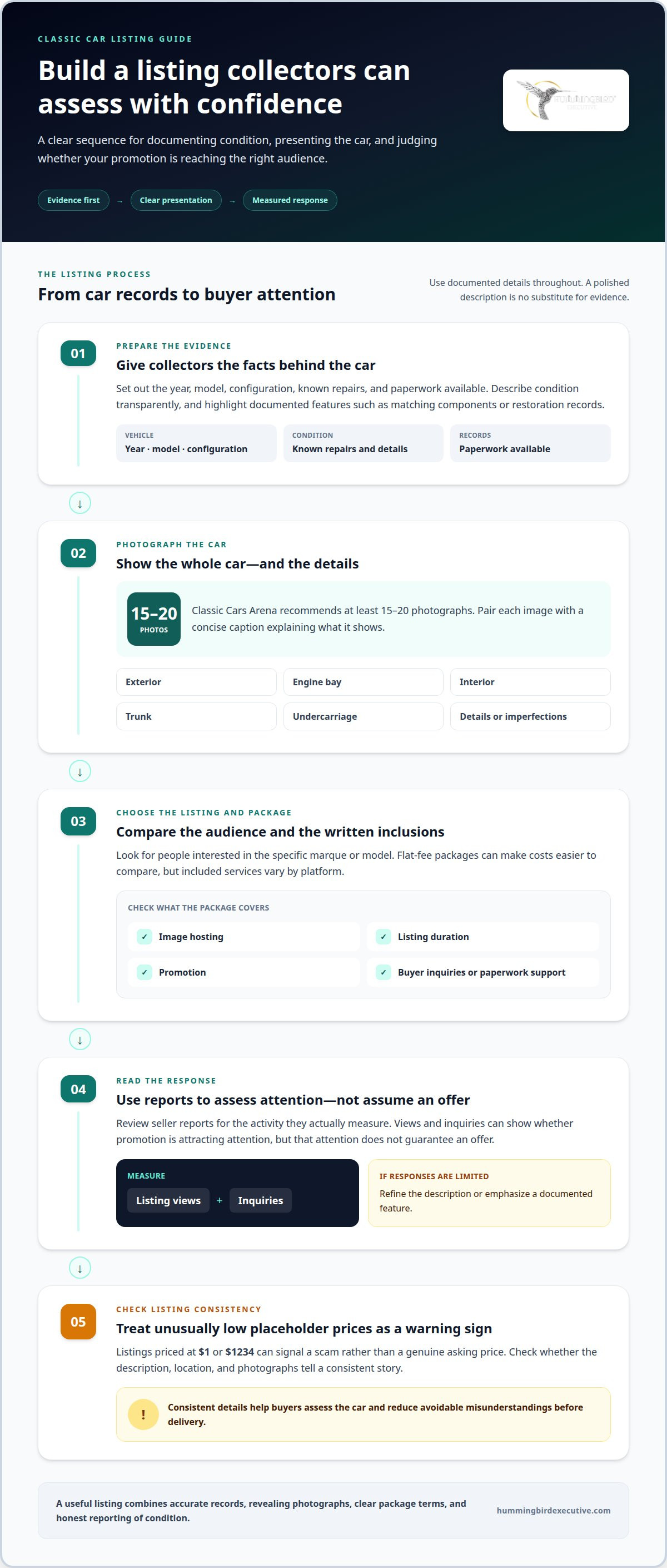
A collector needs evidence, not simply polished copy. Classic Cars Arena recommends at least 15-20 photographs covering the exterior, engine bay, interior, trunk, undercarriage, and notable details or imperfections. Pair each image with concise captions identifying what it shows. Describe the year, model, configuration, known repairs, and paperwork available. A transparent account of condition helps interested buyers assess the car and limits avoidable misunderstandings before delivery.
Promotion should reach people interested in the specific marque or model. Review seller performance reports for the activity they actually measure, such as listing views, inquiries, and how promotion is presented. Use these reports to assess whether an advert is attracting attention, not to assume that attention will lead to an offer. If responses are limited, refine the description or highlight a documented feature, such as matching components or restoration records.
Flat-fee listing packages can simplify cost comparisons, but the included features matter. Before choosing one, check whether it covers image hosting, listing duration, promotion, buyer inquiries, or paperwork support. Inclusions vary by platform. A basic placement may suit a well-documented car with an established following; a more extensive package may help when presentation or targeted exposure needs extra attention. Compare the written terms, not the package label.
Be alert to listings priced at $1 or $1234, which can signal a scam rather than a genuine asking price. Check that the seller’s description, location, and photographs tell a consistent story. A reverse image search can reveal whether the same car photos appear in unrelated listings or places. Ask for current, specific images when details seem inconsistent, and avoid sending money based on photographs alone. Nothing in an attractive advert replaces clear terms for payment, collection, and delivery.
How do I find a vetted buyer for a classic car?
Start with a valuation based on completed sales, not asking prices. Compare cars with the same year, model, engine, and condition. Adjust your estimate for documented restoration, originality, mileage, and known defects. Restored and unrestored examples of the same model, for instance, may appeal to different collectors. Set a defensible asking range before discussing offers, and keep your supporting evidence ready. Finding a vetted buyer for my classic car starts with a clear record of its value.
Next, assess each prospect’s transaction history and proposed process. Ask for specific examples of comparable classic cars they’ve bought, and clarify whether they’re buying directly or representing someone else. Review the offer terms, payment method, inspection access, and collection arrangements together. A credible offer should set out its conditions in writing. If the buyer requests an inspection, agree in advance on how its findings will affect the transaction.
Before proceeding, assemble the title and available ownership records, service invoices, restoration documentation, and photographs. For vehicles built since 1981, the VIN uses a standardized 17-character format. Confirm that the title VIN corresponds with the vehicle’s VIN plate and visible stamped locations. Keep copies of the agreed sale terms and payment record. These materials establish what is being transferred and give both parties a shared account of the car.
Finally, make the sale dependent on clear milestones: signed terms, verified payment, and an agreed handover. Escrow with an inspection period can coordinate payment and inspection, provided the agreement explains how either party may respond to the findings. Don’t release the vehicle or ownership documents based only on a payment screenshot. Finding a vetted buyer for my classic car also means agreeing on these safeguards before committing to a sale.
Hummingbird Executive
Hummingbird Executive provides private access to rare assets and investment opportunities, including luxury cars. For owners considering a discreet sale, its private, one-to-one approach connects members with owners and decision-makers without public listings. Platinum Membership provides access to buy or sell rare assets and investments, with dedicated worldwide concierge services at no extra charge. Gold Membership offers white-glove services seven days a week during opening hours. The right approach depends on the owner’s priorities, the car, and the desired level of assistance. Prepare a concise record of the vehicle, its condition, ownership documents, and your sale preferences. Contact Hummingbird Executive to discuss your classic car sale.
Choose the Next Step on Your Terms
The next decision is how you want the sale to unfold. A public listing may suit an owner seeking broad exposure; a private approach may better match a preference for discretion. Consider the balance of visibility, control, and assistance that matters to you. That preference can guide your choice without rushing the decision.
A thoughtful approach to finding a vetted buyer for my classic car starts with a clear outcome in mind, then matches the sale process to that priority. If you’re considering a private route for a rare vehicle, Hummingbird Executive can be part of the conversation. Share your priorities and an outline of the car to discuss whether its private access to rare assets fits your plans.
Discuss a private classic-car sale with Hummingbird Executive. The right next step is the one that reflects your priorities and leaves you comfortable with the process.
Frequently Asked Questions
Are there any commissions or hidden fees?
Selling costs depend on the channel and written agreement. Request an itemized seller-side breakdown of commission, entry charges, promotion, transport, and any other deductions. Confirm when each charge is payable, including if the car doesn’t sell. Compare what you would receive after deductions rather than relying on a headline commission or verbal explanation.
Is it free to list my classic car?
A listing is free only if the platform’s terms say there’s no charge to publish it. Some arrangements separate listing costs from optional promotion or a fee due after a completed sale. Read the package terms before submitting photographs or paperwork, and note whether renewal, enhanced placement, or payment processing involves a separate charge.
How can I verify a classic car buyer’s identity, funds, and purchase history?
Match the buyer’s legal name to the name on the written offer and payment account. Confirm funds directly through your bank or payment institution, not with a screenshot or an email from the buyer. To assess purchase history, request references for comparable completed acquisitions and ask specific questions about the models bought, transaction structure, and timing.
Should I sell a classic car privately, through an auction, or to a dealer?
Choose the route that fits your priorities. A private sale gives you direct control over buyer discussions; an auction offers a defined bidding process; a dealer can make a direct purchase offer. Consider how involved you want to be, the audience you want to reach, and the agreement’s deductions. A rare model with a collector following may suit a different route from a car that needs extensive explanation.
What scams and legal risks should I watch for when selling a classic car?
Reject overpayment schemes that ask you to return funds, and don’t release the car based on an image of a payment. Mismatched identities, pressure to bypass written terms, and unusual third-party collection arrangements are warning signs. State requirements for title transfer, emissions, and tax vary. If you believe an online car scam targeted you, report it to the FBI’s Internet Crime Complaint Center.
Which classic car auction houses and brokers are reputable in the United States?
RM Sotheby’s is a recognizable auction house. Compare an auction house’s relevant completed sales, agreement terms, audience, and transport arrangements; no specific broker is named.