The person offering a rare asset may not own it. Seller impersonation fraud occurs when someone poses as an owner or authorised representative to persuade a buyer to proceed with a sale or transfer funds. Avoiding fraud in private luxury sales starts with establishing who is on the other side before sharing sensitive information or making a payment.
Discretion matters in high-value transactions, but it should not mean relying on an unverified identity or instructions sent through a single channel. A composed, documented process can protect privacy while keeping each step accountable.
This guide explains how to vet buyers and sellers, protect confidential financial and identity information, conduct due diligence, and verify payment instructions before closing. It also explains how trusted transaction partners can add safeguards, helping you move forward with greater clarity and control.
Key Takeaways
- Assess a prospective buyer’s financial and operational position before sharing sensitive records or moving toward a sale.
- Limit exposure of identity and financial information, and verify unusual requests through a trusted, independent channel.
- Complete identity checks before closing, and confirm payment details directly with the intended recipient before sending funds.
- Use trusted transaction partners to add oversight, especially when instructions change or a deal is being rushed.
1. Conducting financial, tax, and operational due diligence
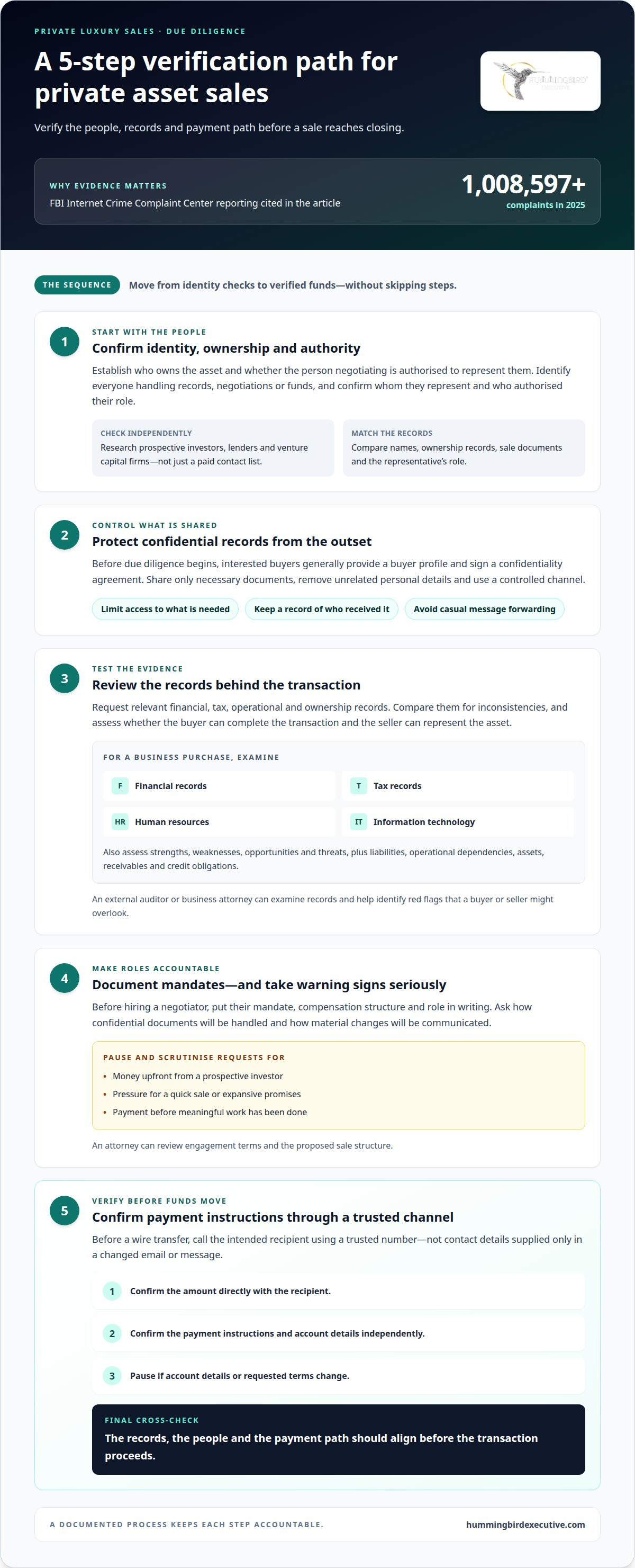
Start with evidence, not presentation. In 2025, the FBI’s Internet Crime Complaint Center reported over 1,008,597 complaints of internet crime. For a private asset or business sale, due diligence should examine the proposed buyer’s ability to complete the transaction and the seller’s authority to represent the asset. Request relevant financial, tax, operational, and ownership records through a controlled process, then compare them for inconsistencies.
For a business purchase, review its financial, tax, human resources, and information technology records. Assess the company’s strengths, weaknesses, opportunities, and threats, along with its liabilities and operational dependencies. A buyer acquiring shares should understand how the company manages its assets, receivables, and credit obligations. A fraudulent buyer could misuse those resources and leave creditors unpaid. An external auditor or business attorney can examine records and identify red flags that a buyer or seller might overlook.
Third-party management needs the same scrutiny as the main transaction. Identify everyone handling records, negotiations, or funds, and establish whom they represent and who authorised their role. Independently research prospective investors, lenders, and venture capital firms. A paid contact list is no substitute for checking the identity, stated interests, and transaction history of the specific party approaching you.
Before hiring a negotiator, put their mandate, compensation structure, and role in the transaction in writing. Be cautious if a prospective investor asks for money upfront, or an intermediary presses for a quick sale, makes expansive promises, or requests payment before doing meaningful work. A seller’s adviser should explain how confidential documents are handled and material changes communicated. Ask an attorney to review the engagement terms and proposed sale structure.
For high-value private sales, verify the recipient and account details independently before making a payment. Before sending a wire transfer, call the intended recipient using a trusted number, not contact details supplied only in a changed email or message. Confirm the amount and payment instructions directly, and pause if the account details or requested terms change. Due diligence is not complete until the records, people, and payment path align.
2. Protecting confidential financial and identity information
Share financial records with prospective buyers cautiously and limit access to information they need. Before due diligence begins, interested buyers generally provide a buyer profile and sign a confidentiality agreement. Limit access to necessary documents, remove unrelated personal details, and use a controlled channel rather than forwarding sensitive files through casual messages. These steps protect financial and identity information while preserving a record of who received it.
For private sales in the United States, applicable rights depend on the transaction, sale terms, and relevant state law. Preserve the listing, written representations, payment records, and messages. These documents help clarify what was promised if a dispute arises. To check authenticity and provenance, compare serial or identifying details with available ownership records, request original documentation, and arrange an inspection by a qualified specialist before purchase.
For a shipped item, sellers can contact buyers directly to confirm the delivery address before dispatch. Keep the confirmation with the order record, and use signature confirmation for high-value deliveries when available. A dated photograph of the package at the delivery location may support a later dispute if signature confirmation is unavailable, although it may be less compelling evidence.
To confirm payment, sellers should rely on their own bank or payment account records, not a screenshot, email receipt, or transfer confirmation supplied by the buyer. A counterfeit confirmation can make an unpaid transaction appear complete. A payment dispute can leave a seller without the funds and, if the item has already been transferred, without the asset. Do not ship until the payment status is independently verified.
On resale marketplaces and social media, keep transaction records, avoid moving payment or identity details into unverified channels, and independently confirm unusual requests with the other party. Buyers should inspect the item and its documentation before committing; sellers should retain dispatch and delivery evidence. For curated access to rare assets, private transaction support can help structure the process with discretion.
3. Why identity checks should happen before closing
Verify identity before making a binding commitment, handing over an asset, or sending payment. A seller who refuses to verify their identity is a potential real estate fraud warning sign. Treat the refusal as a reason to pause, not a detail to resolve after funds move. Early verification gives both parties time to reconcile names, authority, and transaction records before closing pressure rises. A disciplined approach to avoiding fraud in private luxury sales starts before either party commits.
Confirm that the person negotiating is the owner or has authority to represent them. For a company-owned asset, establish the representative’s role and the company’s connection to the sale. Compare the name on the sale documents with the identity and ownership records provided during the transaction. If an agent or intermediary is involved, document whom they represent and how the seller authorised them to act.
Follow a deliberate sequence. First, verify the other party through a trusted, independent channel. Then confirm that the person approving the sale, the named owner, and the intended payment recipient align. Before making a wire transfer, call the recipient using a number already known to you or obtained independently. Do not rely solely on contact details in a message that also provides new account instructions.
Keep a written record of the verified identity, authority, agreed asset, and payment details. A mismatch between the seller’s name and the account recipient, an unexpected change of representative, or new urgency to close can be a red flag. Resolve discrepancies through the established contact channel before proceeding. Avoiding fraud in private luxury sales means allowing time to address inconsistencies. Rushing can give an impersonator an advantage.
For example, if a seller’s email account suddenly sends revised wire instructions, contact the seller through a separate, trusted channel before acting. If the independent confirmation does not match the new request, stop the transfer process and preserve the messages. Early checks help prevent a buyer or seller from becoming the target of a transaction built on a borrowed identity.
4. Brokerage and closing-partner safeguards
A broker or closing agent can coordinate documents, payment milestones, and asset transfer, but their authority must be clear. Before engaging them, record whom the intermediary represents, what decisions they may make, and how changes will be communicated. A written mandate helps the seller distinguish authorised instructions from messages that merely appear to come from an agent.
For a property transaction, changes to wiring instructions are rare and should come only from the closing agent. Treat a sudden change, particularly one sent by email or text, as a reason to pause. Confirm it directly with the known closing agent through an established channel. A request sent on a Friday or before a holiday needs the same independent confirmation, not less scrutiny.
Escrow generally means a neutral party holds funds or documents until the buyer and seller meet the agreed transaction conditions. Define those conditions in writing, including what evidence permits release and how a dispute will be handled. Costs depend on the arrangement and transaction, so establish the fee and who is responsible for paying it before funds enter escrow.
Assess a proposed brokerage or fraud-protection partner by its knowledge of current fraud tactics and ability to consider activity across markets. Ask how it handles sensitive documents, identifies authorised contacts, and records approval for changed instructions. If an intermediary helping sell a business requests money upfront, be cautious. Such a company generally earns commission after an offer is accepted and the sale closes.
At closing, align the signed sale documents, named seller, recipient account, and agreed release conditions. If one element changes, have the closing partner document the reason and reconfirm it through a trusted channel before payment or transfer proceeds. This creates a record of who approved each step and when, while keeping the transaction orderly and accountable.
For discreet access to rare-asset opportunities, explore private asset opportunities.
Hummingbird Executive: platinum Membership full access to rare assets ,investments, buy surch or sale plus 25/7 dedicated concierge services world wide at no extra charge,
Hummingbird Executive is a private next step for ultra-high-net-worth individuals seeking rare assets and investment opportunities to buy or sell. Platinum Membership provides full access to these opportunities, with dedicated concierge services worldwide at no extra charge.
For a private transaction, Hummingbird Executive combines asset sourcing, buying, or selling with concierge support. This can suit members considering an off-market asset who want discreet coordination as they assess the opportunity and transaction process. Identity checks, document controls, and independent payment verification remain important parts of your due diligence.
To explore rare assets or investments through Hummingbird Executive, contact the firm to discuss your requirements.
Set your standard before the next opportunity
A considered transaction begins before a specific asset appears. Establish a private protocol for assessing opportunities, deciding who can approve actions, and identifying trusted communication channels. Agreeing on this standard in advance makes unusual requests easier to recognise and prevents urgency from dictating the process.
Make the protocol proportionate to the asset and the parties involved. A rare property, aircraft, yacht, or investment may require different documents and expertise, but every transaction benefits from clear decision-making and a deliberate record of approvals. This is the practical foundation of avoiding fraud in private luxury sales: preserve discretion while keeping authority and accountability clear to the people responsible.
For access to rare assets and investment opportunities, Hummingbird Executive can be a point of coordination. Contact Hummingbird Executive to discuss your requirements and consider the next step with care.
Proceed on your terms, with a process suited to the value of the opportunity.
Frequently Asked Questions
What is seller impersonation fraud?
Seller impersonation fraud occurs when someone falsely claims to be an asset’s owner or authorised representative to induce a sale or payment. For example, a fraudster may use a compromised email account to impersonate the owner and redirect a buyer’s funds. The risk is not limited to false names: a genuine person’s identity or correspondence may be misused. Verify authority against more than one reliable record.
What are the most common fraud schemes in private luxury goods sales?
Common schemes include impersonating an owner, sending altered payment instructions, presenting counterfeit proof of payment, and disputing a legitimate card transaction after receiving the item. A fraudulent buyer may also push for an unusually fast deal or offer assurances intended to discourage scrutiny. Treat changes to account details, identity, or agreed terms as reasons to pause and establish what changed through a separate, trusted communication channel.
How can buyers and sellers document a private luxury sale to prevent disputes?
Create a dated transaction file containing the signed agreement, item description and identifying details, condition photographs, provenance documents, and written disclosures. Preserve messages recording the agreed amount, payment method, delivery address, and handover conditions. At transfer, record when possession changed and retain delivery evidence. A coherent file gives both parties a shared record of what was represented, accepted, paid, and delivered.
How should a luxury item be shipped and insured for a private sale?
Agree on packaging, dispatch, delivery address, and responsibility for transit before the item leaves the seller. Use a delivery method with signature confirmation for a high-value shipment, and retain dispatch records and time-stamped delivery evidence. Arrange insurance appropriate to the item’s agreed value, then review the policy’s coverage, exclusions, and claim requirements before shipping. Keep the buyer informed through the previously agreed communication channel.
What legal protections and consumer rights apply to private luxury sales in the United States?
Applicable rights depend on the transaction, sale terms, and relevant state law. Preserve the listing, written representations, payment records, and messages to help clarify what was promised if a dispute arises.