A classic car can be a considered investment, but age and marque alone do not make the case. A private vintage car acquisition should be assessed through condition, originality, provenance, rarity and buyer demand, all of which can affect value. Even an important model deserves careful scrutiny.
Private, discreet access can connect buyers with cars held by collectors, but an appealing offer still needs to be weighed against the vehicle’s history and likely ownership needs. A desirable car is not automatically a sound investment.
This guide explains how to assess historical and monetary value, source cars through private collectors and other channels, and review ownership records, factory history and restoration documentation. It also covers the considerations behind insurance and legal protection, so you can approach an acquisition with a clearer view of both the asset and the responsibilities it brings.
Key Takeaways
- Assess a car’s condition, originality, provenance, rarity and buyer demand together; historical importance alone doesn’t establish its investment value.
- Consider private collector listings, auctions and estate sales, and weigh the convenience of an instant cash offer against the information available about the vehicle.
- Use ownership history, factory records and restoration documents to build a clearer picture of provenance and originality.
- Understand how agreed-value insurance and clear legal records can help protect a vintage car and support its ownership history.
Assessing historical and monetary value
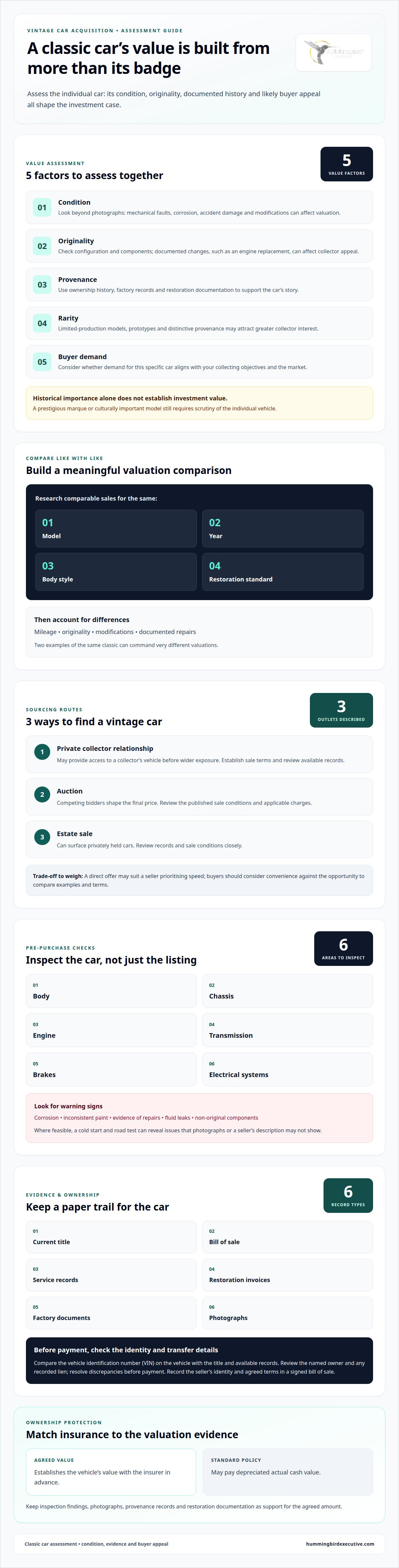
Assess a classic car through its condition, originality, provenance, rarity and market demand. A prestigious badge alone cannot establish value. A Ford Model T, Bugatti Type 57 or Ferrari 250 GTO may carry historical significance, but each vehicle’s specific configuration and documented history matter. For a private vintage car acquisition, separate the car’s cultural importance from its present condition and potential appeal to buyers.
Research comparable sales for the same model, year, body style and restoration standard. Then account for differences in mileage, originality, modifications and documented repairs. A 1965 Ford Mustang coupe may be considered classic by buyers and sellers, yet two examples can command very different valuations. Limited-production models, prototypes and cars with distinctive provenance may attract greater collector interest.
Historical significance and investment potential are not interchangeable. Consider how a car’s rarity, authenticity and demand align with your collecting objectives. If assessing a collection as a financial asset, market trends and possible future value may also inform your analysis. Keep assumptions explicit: restoration costs, originality and future demand can affect the case in different ways.
Buying sight unseen or without a pre-purchase inspection risks overlooking mechanical faults, corrosion, accident damage or modifications that photographs and seller descriptions may not reveal. An inspection can document the vehicle’s condition and identify issues that may change its valuation or suitability.
For family transfers, the Internal Revenue Service states the federal gift tax annual exclusion was $18,000 per recipient in 2024. The Internal Revenue Service states the federal gift tax annual exclusion is $19,000 per recipient for 2025 and 2026. These figures provide tax context, not a valuation method for a car. For business-use questions, Internal Revenue Service Topic No. 510 addresses vehicle business-use deductions.
Insurance should reflect the valuation approach. Agreed-value insurance establishes the vehicle’s value with the insurer in advance, unlike standard policies that may pay depreciated actual cash value. Keep supporting evidence, including inspection findings, photographs, provenance records and restoration documentation, so the agreed amount has a clear basis.
Sourcing cars from private collectors, auctions, and estate sales
Private collector relationships, auctions and estate sales each offer a different route to a vintage vehicle. Choose an approach based on the car, your transaction priorities and the documentation available.
Choosing a Sales Outlet
Match the route to the vehicle and your priorities. A rare, historically significant model may be available through a private collector relationship, while an auction brings competing bidders into the process. Estate sales can surface cars held privately, so review records and sale conditions closely. Sellers prioritising speed may consider a direct offer; buyers should weigh convenience against the chance to compare examples and terms.
Private, Dealer, and Auction Sales
A private sale typically involves direct negotiation between an individual seller and buyer. It may provide access to a collector’s vehicle before wider exposure, but the parties need to establish sale terms and review available records. Dealer purchases involve a business seller and may offer a more structured transaction. Auctions follow a bidding process and published sale conditions, with the final price shaped by bidder competition and applicable charges.
Private-Sale Inspection
Before agreeing to a private purchase, arrange an inspection of the body, chassis, engine, transmission, brakes and electrical systems. Look for corrosion, inconsistent paint, evidence of repairs, fluid leaks and non-original components. Compare the vehicle identification details with its title and available service records. A cold start and road test, where feasible, can reveal issues photographs or a seller’s description may not show.
Purchase Fees and Taxes
In the United States, budget for applicable state or local transaction taxes and title or registration charges; the amount depends on the jurisdiction and transaction. Ask for the agreed sale price and any separately stated charges in writing before payment. Tax treatment also matters when a collectible car is later sold: according to the Internal Revenue Service, long-term gains on collectible cars may be taxed at a federal rate of up to 28%. Keep acquisition and ownership records to support future tax reporting.
Documentation, archives, insurance, and legal protection
Build a record that connects the car’s identity, ownership and condition. Gather the current title, bill of sale, service records, restoration invoices, factory documents and photographs. Trace past owners, factory records and modifications; a documented engine change, for example, can affect originality and collector appeal. Keep the records with the purchase agreement and payment receipt.
To verify title, vehicle identification number (VIN), ownership and liens, compare the VIN on the vehicle with the title and available records. Review the title for the named owner and any recorded lien, resolving discrepancies before payment. Record the seller’s identity and agreed terms in a signed bill of sale. These steps create a clear paper trail for the transfer.
Registration, title-transfer and emissions rules vary by state, so the vehicle’s location and intended use matter. New York defines vintage vehicles as over 25 years old when used solely for club activities or exhibitions. Texas allows classic registration at 25 years, with limitations on driving use. Virginia exempts antique vehicles from emissions inspections and provides lower registration fees. Some registration and emissions benefits also carry mileage limits.
Preserve an automotive archive beyond the title file. Original brochures, advertisements, service records and restoration photographs can document the car’s history. A digital record with high-resolution images, specifications and ownership history makes information easier to retrieve, especially when a collection includes multiple vehicles. Label each file with vehicle identification details, not just the model name.
Arrange insurance around the vehicle’s stated value and intended use. Agreed-value coverage establishes the value with the insurer in advance; retain the appraisal material and supporting records. If the car is loaned to a museum or event, document the loan terms, dates, custody and insurance responsibilities before transport. A written record clarifies who holds the vehicle and under what conditions.
For payment and delivery, include the amount, payment method, release conditions and handover details in the signed agreement. Arrange insurance to begin before the vehicle leaves the seller, and retain transport instructions and delivery records. Confirm receipt of the keys, title and archive at handover. A single transaction file links payment, shipping, insurance and ownership documents.
Private listings and instant cash offers
Private relationships can reveal vintage and antique cars that are never advertised publicly, connecting a buyer directly with a collector considering a discreet sale. Access is only the beginning: the offer still needs a clear price basis, reliable records and an independent assessment of the vehicle.
Review an offer as a set of terms, not just a headline amount. Identify the exact vehicle, included components, known defects, payment timing and handover conditions. Clarify whether a direct offer is final or subject to inspection, and what could change it. A rapid, defined transaction may suit an owner prioritising speed; a longer process may suit one seeking competing interest. Neither route establishes fair value by itself.
Compare a private offer with relevant completed sales for the same make, model, year and specification. Account for differences in originality, condition, provenance and restoration quality. A rare Ferrari with documented history is not directly comparable to a modified example, even if both share a model name. Record the valuation rationale, including the documentation and condition details supporting the proposed figure.
For sellers, prepare a concise dossier before sharing details privately. Include clear photographs, identification details, ownership history, service records and a candid account of known issues. For buyers, treat a brief description as a starting point, then arrange an inspection and agree written payment and delivery terms. These steps reduce ambiguity while preserving discretion.
Use the channel that matches your priority: private access for discretion, wider exposure for market competition, or a direct offer for a defined sale process. If access to privately listed rare assets is central to your search, explore private rare-asset listings as a considered next step.
Hummingbird Executive
Hummingbird Executive offers a discreet route when your search extends beyond the cars you can identify yourself. Platinum Membership provides full access to rare assets and investments for search, purchase or sale, with dedicated worldwide concierge services at no extra charge. It can serve ultra-high-net-worth members seeking a privately held car or considering a discreet sale.
Gold Membership offers white-glove services seven days a week during opening hours. Free Access White-Glove Service also provides access to white-glove services worldwide during opening hours. Membership is reserved exclusively for ultra-high-net-worth individuals; the right option depends on the access and support you seek.
For a considered vintage-car search, Hummingbird Executive can provide access to rare assets through its membership offerings. Contact Hummingbird Executive to discuss your requirements.
Make Your Next Move With Intention
The right vintage car should fit more than a collection. It should align with how you intend to use, preserve and eventually manage the asset. Before moving forward, define your priorities: a particular marque, documented history, originality or access to a car rarely offered for sale. That clarity helps keep an attractive opportunity in perspective.
A considered private vintage car acquisition is ultimately a decision about fit, not urgency. When a compelling vehicle appears, private access to rare assets can make the next step more deliberate. Hummingbird Executive’s membership offers qualified members access to rare assets and investments, with dedicated concierge or white-glove service options.
Contact Hummingbird Executive about acquisition to discuss your requirements and the kind of opportunity you’re seeking. Proceed with a clear brief, measured judgement and confidence in the direction you choose.
Frequently Asked Questions
Are Classic Vehicles a Good Investment?
Some classic vehicles may appreciate, but returns depend on the specific car and market demand. Rarity, condition, originality, provenance and restoration quality can influence future resale interest. Ownership also brings costs and responsibilities that affect the overall investment case. A car chosen primarily for enjoyment may suit different priorities from one acquired with resale potential in mind. Treat appreciation as possible, not assured.
What is a fair price for a vintage car, and how can I check comparable sales?
A fair price reflects the individual car, not just its model name. Compare completed sales for the same year, body style and specification, then note differences in originality, restoration quality and documented history. Separate confirmed transaction prices from asking prices, which show seller expectations rather than completed deals. Record the source and details of each comparison; a few closely matched examples are more useful than broad model averages.
What documents and bill of sale are needed for a private vintage car purchase?
Prepare a signed bill of sale identifying buyer and seller, vehicle identification number, sale date, agreed amount and payment status. Attach the title-transfer paperwork and list any included parts, keys or records. The seller’s written description of known modifications or outstanding issues can clarify what the agreement covers. Title procedures vary by state, so use the relevant state forms and retain copies of the completed transaction documents.