The strongest offer is rarely secured by broad exposure alone. Facilitating private luxury asset sales calls for a deliberate sequence: establish the asset’s value and sale priorities, identify buyers with the means and intent to proceed, control what is disclosed, and shape the process around the asset and its market. The aim is not simply to attract interest, but to create a credible path from discreet introduction to informed offer.
Privacy matters, but so does reaching the right audience. A carefully managed sale can protect sensitive details while giving qualified buyers the information they need to assess an opportunity. This guide explains how to screen prospective buyers, manage confidentiality, tailor the sales approach to the asset, and handle a potential sale with care. Each step supports a deliberate process, whether your priority is discretion, stronger offers, or liquidity from an illiquid holding.
Key Takeaways
- Screen prospective buyers for both the means and genuine intent to purchase before sharing sensitive details.
- Use controlled, staged disclosure to protect privacy while giving serious buyers the information needed to assess an asset.
- Tailor the sales approach to the asset’s qualities, likely audience, and market rather than relying on broad exposure.
- Support liquidation decisions with a considered valuation that accounts for condition, market context, and the asset’s distinctive value.
Identifying buyers who are ready and able to purchase
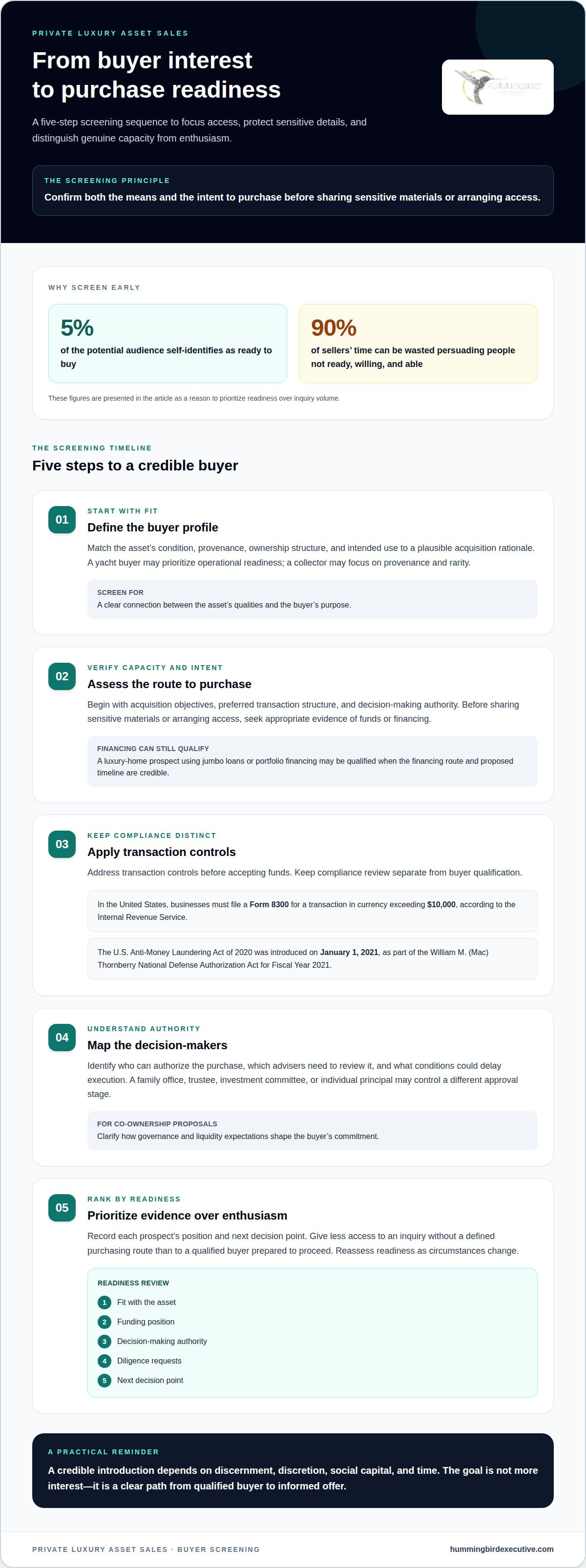
- Define the buyer profile before introducing an opportunity. Match the asset’s condition, provenance, ownership structure, and intended use to a plausible acquisition rationale. A yacht buyer may prioritize operational readiness, while a collector may focus on provenance and rarity. In facilitating private luxury asset sales, a clear profile makes introductions more relevant and keeps early discussions focused on genuine fit.
- Assess capacity and intent in stages. Begin with the buyer’s acquisition objectives, preferred transaction structure, and decision-making authority. Before sharing sensitive materials or arranging access, seek appropriate evidence of funds or financing. A luxury-home prospect using jumbo loans or portfolio financing may still be qualified when the financing route and proposed timeline are credible.
- Apply transaction controls before accepting funds. In the United States, businesses must file a Form 8300 for a transaction in currency exceeding $10,000, according to the Internal Revenue Service. The U.S. Congress introduced the U.S. Anti-Money Laundering Act of 2020 on January 1, 2021, as part of the William M. (Mac) Thornberry National Defense Authorization Act for Fiscal Year 2021. Keep compliance review distinct from buyer qualification.
- Map the decision-makers behind each offer. A family office, trustee, investment committee, or individual principal may control a different approval stage. Establish who can authorize the purchase, which advisers need to review it, and what conditions could delay execution. For a co-ownership proposal, clarify how governance and liquidity expectations shape the buyer’s commitment.
- Rank prospects by readiness, not enthusiasm. Record each buyer’s fit with the asset, funding position, authority, diligence requests, and next decision point. An inquiry without a defined purchasing route should receive less access than a qualified buyer prepared to proceed. Reassess readiness as circumstances change. This discipline strengthens the process of facilitating private luxury asset sales without mistaking interest for purchasing capacity.
Buyers self-identifying as ready are 5% of the potential audience; sellers can waste 90% of their time persuading people not ready, willing, and able to buy.
Requests for a luxury-asset buyer may require trusted introductions, discernment, discretion, social capital, and time; a request sought a buyer for luxury hotels in Asia valued at 33 Millions. Banks may lack time to assess affordability, while next-generation investors and family members scrutinise investment theses and risk-adjusted returns and may disengage from underperforming sectors.
Confidentiality and security
Private sales control who sees an asset’s details; public listings and auctions invite broader visibility. Auctions concentrate offers around a defined event, while private negotiations allow tailored disclosure; price and timing depend on buyer interest, asset condition, and diligence.
- Set disclosure stages before outreach. Prepare a concise overview for initial interest, then reserve sensitive records for qualified prospects. For a yacht, the first summary might describe general specifications and location, with detailed ownership and maintenance documents shared later. This gives buyers useful context without disclosing everything at once.
- Limit identifying information in early materials. Remove personal names, precise addresses, registration details, and security arrangements from preliminary documents. Use a neutral asset reference instead of the owner’s name. For a private residence, share its region and principal features before arranging a private viewing or disclosing its exact location.
- Control access to records. Keep diligence materials in a secure, permission-based environment and grant access only to those evaluating the purchase. Track which documents are shared and with whom. If a buyer’s legal adviser needs ownership records, provide the relevant material without exposing unrelated family or financial information.
- Agree on communication boundaries. Identify who may speak for the seller, which channels are appropriate, and how inquiries should be handled. A single designated representative can prevent inconsistent descriptions and accidental disclosure. For an asset held through a trust or company, align communications with the authorized decision-makers before buyer discussions progress.
- Plan the final transfer with discretion. Coordinate document exchange, payment arrangements, asset inspection, and handover as connected stages. A vehicle sale, for example, may involve separate discussions about inspection access and transfer records. For measured white-glove transaction support, keep each stage deliberate and information access proportionate to the buyer’s role.
Customized sales strategies
In the United States, state and asset category shape the relevant buyer pool, presentation, and transaction logistics. A strategy for a residence differs from one for a yacht, private jet, or collectible vehicle.
-
Choose a Private Sale Approach
Select the channel that fits the asset and intended audience. Private introductions, specialist intermediaries, invitation-only viewings, and curated online platforms can each connect an opportunity with prospective buyers. For a property, a private tour or high-definition walkthrough may convey its features; a rare vehicle may benefit from a focused presentation of condition, provenance, and ownership records.
Adapt outreach to location as well as category. Regional tastes and economic conditions influence which buyers engage, while an asset’s rarity and provenance can shape its appeal across markets. Use niche publications or targeted digital outreach when broader discovery is useful, but avoid presenting every asset through the same campaign. Keep descriptions accurate and materials proportionate to the intended audience.
-
Arrange Transaction Logistics
Settle the transaction sequence before accepting an offer: agree on payment mechanics, any escrow arrangement, inspection access, shipping responsibilities, and insurance coverage. Specify who coordinates each stage and what conditions must be met before transfer. For a yacht, delivery and insurance planning differ from transporting a collectible car or artwork.
Align written terms with the asset’s route and handover. Confirm that the payment and escrow arrangements suit the transaction, and define when funds are released and possession changes. Coordinate specialized transport and insurance around the asset’s condition, destination, and time in transit. Avoid informal assurances when the agreement can state responsibilities clearly.
- Tailor the final presentation to the buyer’s decision process. A family office assessing an investment may need a concise account of condition, ownership, and potential use; a private collector may place greater weight on provenance and rarity. Prepare relevant materials in advance, then use private viewings or virtual tours to answer specific questions without expanding disclosure unnecessarily. For a considered approach to private luxury transactions, keep the strategy aligned with the asset and its intended audience.
Luxury asset liquidation
Move from valuation to closing through a sequence tailored to the asset and its ownership. Art, jewelry, yachts, and real estate each require distinct records, presentation, and transfer planning.
-
Value and Price the Asset
Start with a specialist valuation that considers condition, current market trends, brand value, rarity, and provenance. For a classic car, service history and condition can inform the assessment; for a painting, provenance and cultural significance may carry particular weight. Set an asking position that reflects the evidence. Overpricing can deter buyers, while an implausibly low figure may raise concerns about authenticity or condition.
-
Select a Platform or Broker
Choose a channel with a relevant audience and experience in the asset category. Specialist brokers and curated platforms can facilitate private sales of art, jewelry, yachts, and property; private introductions may suit an asset requiring controlled exposure. Compare the proposed reach, presentation, buyer screening, and transaction coordination. Avoid a generic listing when the asset’s provenance, technical details, or viewing requirements need a specialist approach.
-
Review Fees and Commissions
Before appointing a broker or marketplace, request a written breakdown of commission and other transaction charges, and clarify which services the terms cover, such as valuation, marketing, buyer coordination, or closing support. Costs vary with the asset and sale arrangement, so assess them against the support required and the scope of the sale.
-
Address Documents, Taxes, and Disclosures
Assemble ownership or title records, provenance, condition reports, and a written sale agreement. The documents and disclosures depend on whether the transaction concerns artwork, a yacht, jewelry, or real estate, as well as the ownership structure and locations involved. Map tax considerations and transfer requirements for the particular asset before signing. One document set will not suit every category.
For access to rare assets and investment opportunities to buy or sell, explore platinum Membership.
Hummingbird Executive: platinum Membership full access to rare assets ,investments, buy surch or sale plus 25/7 dedicated concierge services world wide at no extra charge,
Hummingbird Executive connects elite members with rare assets and investment opportunities for buying or selling, supported by dedicated concierge services. Platinum Membership provides full access to these opportunities and worldwide concierge support at no extra charge.
For sellers, Hummingbird Executive can help provide a discreet route to prospective buyers through direct relationships with owners and decision-makers. For buyers, membership provides access to rare assets and investments through a private platform. The concierge can support your engagement as you assess an opportunity or plan a sale.
Gold Membership offers white-glove services seven days a week during opening hours. Choose the membership level that aligns with your priorities for access and support.
For a discreet next step, contact Hummingbird Executive to discuss your interest in buying or selling rare assets.
Make the Next Move Deliberately
A private sale can be more than a single transaction. It can create room to reconsider how an asset fits within a broader wealth strategy, including liquidity needs, succession priorities, and the balance between tangible holdings and other investments. That perspective can help shape not only whether to sell, but also the timing and terms that make sense for your objectives.
A disciplined approach to facilitating private luxury asset sales keeps the next decision in view while protecting the value and discretion that matter to you. The right time to proceed is when your priorities are clear and the transaction can be structured around them.
If you are considering a sale or seeking access to a rare asset, begin a conversation with Hummingbird Executive. Take the next step with care and a clear sense of purpose.
Frequently Asked Questions
How can sellers verify buyers and prove funds in a high-value private transaction?
Verify identity, purchasing authority, and evidence of funds before providing deeper diligence access. For an entity, establish who can bind it and obtain confirmation from an authorized representative. Request a bank or adviser letter through a channel you can authenticate independently, then reconcile the named purchaser with the proposed contract and payment source. Record approvals and any remaining transaction conditions.
How can sellers protect privacy and prevent fraud, theft, or payment disputes?
Use access-controlled document sharing, watermark sensitive files, and keep a record of who received them. Confirm payment instructions through a trusted, previously established channel rather than relying on a message that changes account details. Before releasing an asset, document its condition, custody, and handover with the buyer. Keep the signed agreement, payment confirmation, and transfer records together to maintain a clear audit trail.