A property purchase can expose personal information through routine document exchanges and closing communications. Protecting your identity when buying property means sharing sensitive files through secure channels, reviewing loan documents before signing, and independently verifying wire instructions by phone. These steps help reduce risks such as identity impersonation, phishing emails, and closing scams.
It’s reasonable to expect a transaction involving your finances and identity to be handled discreetly. Practical safeguards matter at every stage, from mortgage applications to fund transfers and the records that follow closing. This guide explains how to limit exposure when sharing documents, strengthen account security, spot suspicious messages, and review property records after the purchase. A measured process helps keep sensitive details under tighter control throughout the transaction.
Key Takeaways
- Review mortgage paperwork for accurate loan details and blank spaces before signing, and keep an eye on property records after closing.
- Limit exposure of financial documents by using secure account protections and carefully managed document-sharing methods.
- Treat unexpected changes to payment instructions or urgent requests as warning signs; verify them through a trusted, independently sourced contact method.
- Inspect suspicious email addresses, links, and attachments before responding, especially when a message appears to come from someone involved in the transaction.
1. Mortgage and property-document fraud prevention
Mortgage and property-document fraud can involve stolen identities, forged deeds, or a false seller attempting to transfer a home. More than half of U.S. real estate professionals experienced a seller impersonation fraud attempt in 2023. According to the National Association of Realtors, real estate wire fraud caused nearly $446 million in losses in 2023. Review loan information carefully, and don’t sign documents with blank spaces that could later be altered.
Deed records may expose a homebuyer’s name, property address, and transaction details. Access to public records and disclosure practices vary by state or county, so the rules and records relevant to a purchase depend on the property’s location. Some buyers use an LLC or trust to hold property, putting an entity’s name on the deed instead of an individual’s. This does not guarantee privacy: transaction documents and entity records may still reveal ownership details.
Check whether the county recording office offers fraud alerts that notify property owners about activity involving their records. After closing, periodically review your property records for errors or activity you don’t recognize. Title insurance may help cover legal expenses and financial losses if an identity thief claims ownership. Lenders normally require title insurance to protect their interests; homeowners can also purchase optional coverage after completing a purchase.
If identity theft arises during a purchase, notify your lender and title company promptly and report it to the appropriate authorities. Review your credit reports for unfamiliar accounts or hard inquiries. The Federal Trade Commission says U.S. consumers can request a credit freeze separately from each of the three major credit bureaus. A freeze can help prevent someone from opening new credit in your name.
Keep a record of suspicious documents and communications, including dates and the names of people involved. If a deed or lien appears unauthorized, contact the county recorder’s office about its fraud alert process and reporting steps. Prompt attention matters: a forged deed or impersonated seller can affect ownership records, loan activity, and the progress of a closing.
2. Secure communication of sensitive documents
A mortgage application may involve tax returns, bank statements, identification, and employment records. Each file contains details that could be misused if they reach the wrong recipient. Before sending documents, ask your lender or real estate agent whether they provide a secure portal. Using a portal keeps exchanges in a designated account instead of scattered across ordinary email threads.
Some mortgage companies accept sensitive financial records, including W-2s and tax documents, as unencrypted email attachments. Email can be forwarded, sent to the wrong address, or accessed through a compromised account. Confirm the recipient’s address through a trusted channel before sharing any file. If a portal is available, use it for the document exchange and avoid attaching the same records to routine messages.
Protect the accounts where those files are stored. Use a unique password for each mortgage, email, and financial account, and update passwords regularly. Experts recommend changing them every three months. A password manager can help organize distinct credentials without relying on familiar names or repeated phrases. Turn on multifactor authentication wherever it’s offered. This requires at least one identity-verification method in addition to a password when logging in.
Device security matters, too. Install operating-system and browser updates, lock your phone or computer when unattended, and avoid opening financial records on a shared device. Before uploading a file, check the portal address and confirm you’re signed into the intended account. A saved browser shortcut can reduce the risk of entering credentials on a lookalike page.
Keep a simple record of what you sent, when you sent it, and to whom. Remove unnecessary copies from shared devices and downloads once they’re no longer needed, while retaining documents required for your records. For a property acquisition involving several moving parts, white-glove membership services can provide tailored assistance during opening hours, seven days a week.
3. Mortgage closing scams
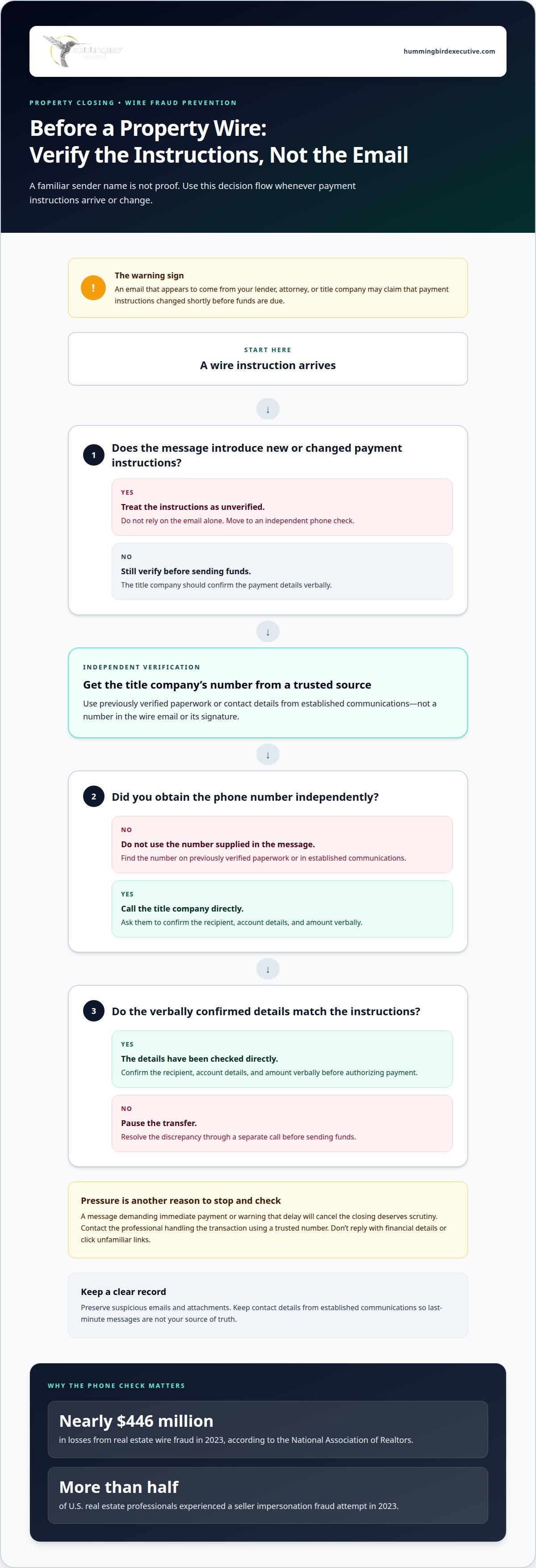
A closing scam may begin with an email that appears to come from your lender, attorney, or title company. It may claim payment instructions have changed shortly before funds are due. Fraudsters can imitate familiar names and language, making an unexpected request seem consistent with the transaction. Treat every new or revised wire instruction as unverified until you confirm it directly.
Before sending funds, call the title company using a number obtained independently, such as one on previously verified paperwork. Don’t use a number supplied in the message containing the wire instructions. Ask the company to confirm the recipient, account details, and amount verbally. If the details differ from earlier instructions, pause the transfer until you resolve the discrepancy through that separate call.
Keep the lender’s and title company’s contact details from established communications, rather than relying on a last-minute email signature. Calling a known number creates a separate verification channel. For example, if an email requests a new account, call the title company using its saved number and confirm the change is genuine before authorizing payment.
Watch for pressure tactics. A message insisting that funds must be sent immediately or that a delay will cancel the closing deserves scrutiny. Contact the professional handling your transaction through a trusted number, and don’t reply with financial details or click unfamiliar links. A legitimate-looking sender name alone doesn’t prove who sent the message.
If a suspicious instruction arrives, preserve the email and any attachments, then contact your lender and title company using independently sourced numbers. If you’ve already sent a wire transfer, call your bank immediately and report the suspected fraud. Quick contact gives the bank essential transaction details as it reviews what action may be possible. Record the time, amount, recipient information, and people contacted. This organized record can support follow-up with the financial institution and transaction professionals.
4. Phishing emails targeting homebuyers
Phishing emails imitate people involved in a property purchase to obtain login details, identity documents, or financial information. A message may use a familiar lender’s name, a national bank’s logo, or details about an upcoming signing. Such details can make a false request seem credible. Inspect the sender’s full email address, not just the display name, and compare it with earlier trusted messages.
Look for unexpected changes in tone or procedure. An email might ask you to open a document through an unfamiliar link, re-enter account credentials, or send identification in a reply. Don’t use the message’s links or attachments to verify its claims. Instead, open the lender’s established portal using a saved address, or contact the known representative at a number from earlier verified correspondence.
Check links before opening them. On a computer, hover over a link to reveal its destination; on a mobile device, press and hold to preview it without opening. Watch for misspellings, extra words, or domains that differ from the organization’s usual address. A secure-looking logo or polished design doesn’t prove that the sender is genuine.
If an email seems suspicious, don’t reply or forward sensitive files. Report it using your email provider’s phishing function, then contact the supposed sender through a separate, trusted channel. If you entered a password, change it on the legitimate account page and review recent account activity. If you shared identity or financial documents, promptly notify the lender and transaction professionals, and record what you disclosed.
Keep property-related email in a dedicated folder, and avoid storing passwords or account details in message drafts. This makes legitimate correspondence easier to distinguish from an unexpected request during a busy closing. For discreet support around a property acquisition, explore white-glove membership services.
Hummingbird Executive
For buyers exploring rare property and other exclusive assets, Hummingbird Executive provides private access through membership. Platinum Membership offers access to rare assets and investments to buy or sell, alongside dedicated worldwide concierge services. Gold Membership includes white-glove services seven days a week during opening hours.
These services complement, but do not replace, the fraud-prevention measures above. Use secure document channels and independently verify closing instructions to protect personal information during a transaction. Turn to Hummingbird Executive for curated access to rare assets or concierge assistance as you pursue an acquisition. Membership is reserved exclusively for ultra-high-net-worth individuals and the qualified few; the right tier depends on the access and service you seek.
Contact Hummingbird Executive to discuss the membership suited to your requirements.
Make discretion part of your next move
A property transaction can set the standard for handling sensitive decisions in the future. Before another acquisition begins, decide which channels you trust, who may receive personal information, and how you’ll authenticate unexpected requests. A clear protocol makes discretion a deliberate part of the process rather than a last-minute reaction. That discipline supports protecting your identity when buying property and can carry over to other high-value transactions.
For a purchase involving rare property or other assets, Hummingbird Executive offers curated access and discreet assistance to qualified members. Consider whether this support aligns with your plans, then contact the team to discuss membership.
Contact Hummingbird Executive to begin a conversation about your requirements. Proceed at your own pace, with a considered approach to each decision ahead.
Frequently Asked Questions
What Is Real Estate Identity Theft?
Real estate identity theft involves using someone else’s identifying information to manipulate a property transaction. An impostor might pose as a buyer to pursue financing or impersonate an owner to attempt a property sale or deed transfer. Unlike ordinary account misuse, this can affect credit, funds, and ownership records. Watch for unexpected transaction activity tied to your name or property.
Why is identity theft such a big risk during home buying?
A home purchase brings sensitive personal, financial, and property information together across communications with lenders and transaction professionals. That combination can attract fraudsters seeking credentials, documents, or funds. For example, access to a mortgage applicant’s email could expose transaction correspondence and make an impersonation attempt more convincing. Risk can arise at several points, not only when funds change hands.
How can you protect your identity when buying a house?
Protecting your identity when buying property starts with controlling who receives your information and understanding how it will be handled. Verify real estate and mortgage professionals’ current licenses through the relevant state, county, or city regulatory agency. Ask your lender how it stores personal information and what happens to those records after the loan is completed. Keep a note of the answers.
What personal information is required to buy property in the United States?
There isn’t one fixed document list for every purchase; requests depend on the financing and transaction. A mortgage application may involve identity records, income and tax documents, employment details, and financial information. For example, some applicants provide W-2s and tax records. Before sharing a document, understand its purpose, who will receive it, and how it will be submitted.
How can homebuyers protect financial and identity documents during a real estate transaction?
Use a simple document inventory to track what you’ve submitted, who received it, and why you shared it. Ask the lender how applicant records are stored and handled after the loan is complete. This helps you understand the document trail beyond closing. Keep the inventory separate from the sensitive files themselves, so it remains useful without duplicating financial or identity details.
How do wire fraud and real estate closing scams target homebuyers, and how can they be prevented?
Scammers may impersonate transaction professionals to redirect a payment or obtain account credentials. Treat a change in payment instructions as a new request that needs independent confirmation, not an update to follow automatically. If you’ve already sent funds, contact your bank promptly. Preserve the suspicious message, sender details, and timeline, as these records can help explain what happened during follow-up.